Níže přináším výsledky 10. ročníku soutěže o nejlepší maxikartu světa roku 2012. První místo obsadila rakouská maxikarta s portrétem Fritzy Riedler od Gustava Klimta, 2. místo obsadilo Rusko s maxikartou s Klášterem Nejsvětější trojice, který stojí ve městě Sergiyev Posad a konečně 3. místo patří Brazílii a maxikartě s lanovkou na horu zvanou Homole cukru, která se tyčí nad městem Rio de Janeiro. Naše maxikarta s portrétem Dívky s dlouhými vlasy od malíře Kamila Lhotáka nakonec obsadila 14. místo. Všechny nominované maxikarty za rok 2012 si můžete prohlédnout zde.
---------------------------------------------------------------------------------------------------------------
10th FIP MAXIMAPHILY World competition FOR
THE Best Maximum Card CREATED IN 2012
Montreal – Paris, April 15, 2014
For the 3rd time, the 10th World Competition for the three Best Maximum Cards created in 2012' was posted on our Website www.maximafily.info and open for Voting to all our official Delegates. Also, for the 3rd time, the Voting for this Competition, was done electronically. The Voting period was from March 10, 2014 to April 9, 2014. The official Delegates had to send in by email their Voting Papers with their Choices to both the Chairman and the most experienced Bureau Member Mme Anny Boyard. If a Country Vote was sent only to me as Chairman, I automatically forwarded that Vote to Mme A. Boyard to ensure the integrity and security of the Vote. Mme Anny Boyard has been in charge of verifying the Vote Results and she did a very thorough verification by checking every FIP Country Vote received.
There were 60 participating countries in this '10th World Competition for the three Best Maximum Cards created in 2012'. There were 42 Votes cast by Delegates representing 42 FIP Countries and out of the 60 participating countries, 43 countries received a Vote.
The Results of the three (3) Best Maximum Cards created in 2012 are the following:
1st Prize: Austria (66 points)
Frietza Riedler, 1906 painting by Gustav Klimt
This Maximum Card was created by Peter Riedl. The postcard is published by the Österreichische Galerie Belvedere, Vienna. The First Day cancellation of Wien (Vienna) has a special mention ‘GUSTAV KLIMT’ and a concordant illustration (triple). The stamp was issued for the 150th Birth Anniversary of Gustav Klimt 1862-1918.
The Portrait of Fritza Riedler Oil on canvas (1906, Österreichische Galerie Belvedere, Vienna) is one of the early portraits of the Austrian painter and illustrator Gustav Klimt, b. July 14, 1862, d. Feb. 6, 1918, founder of the school of painting known as the Vienna SECESSION MOVEMENT, or the Viennese version of Art Nouveau. This school embodies the high-keyed erotic, psychological, and aesthetic preoccupations of turn-of-the-century Vienna's dazzling intellectual world, as the society underwent dramatic changes. Klimt's portraits of females give an indication of the emergence of an increasingly confident middle class. His likenesses of Fritza Riedler and Adele Bloch-Bauer (one of the most expensive paintings in the world) have lost nothing of their appeal to this day. Likewise that of his life-long companion, Emilie Flöge, an emancipated and modern woman.
The dominant themes of Klimt's work are the primal forces of sexuality, regeneration, love, and death. His paintings of femmes fatales, such as Judith I (1901; Osterreichische Galerie, Vienna), personify the dark side of sexual attraction. The Kiss (1907-08; Osterreichische Galerie) celebrates the attraction of the sexes; and Hope I (1903; National Gallery, Ottawa) juxtaposes the promise of new life with the destroying force of death.
Klimt's style drew upon an enormous range of sources: classical Greek, Byzantine, Egyptian, and Minoan art; late-medieval painting and the woodcuts of Albrecht Dürer; photography and the symbolist art of Max Klinger; and the work of both Franz von Stuck and Fernand Khnopff. In synthesizing these diverse sources, Klimt's art achieved both individuality and extreme elegance.
2nd Prize: RUSSIA (57 points)
ARCHTECTURAL ENSEMBLE OF THE HOLY ST. TRINITY
SERGIUS LAVRA, SERGIEV- POSAD
This Maximum Card was created by Valery Petrov. The postcard is suupport is an official ‘Marka’ Postal Stationary, nr. 2010 – 198/1. The First Day cancellation of Sergei-Posad has a special mention ‘World Cultural Heritage in Russia – Trinity-Sergius Lavra' and a concordant illustration (triple). The stamp was issued to publisize World Cultural Heritage Sites in Russia.
The Trinity Lavra of St. Sergius is the most important Russian monastery and the spiritual center of the Russian Orthodox Church, situated in the town of Sergiyev Posad, about 70 km NE of Moscow and currently is home to over 300 monks. It was founded in 1345 by one of the most venerated Russian saints Sergius of Radonezh, who built a wooden church in honour of the Holy Trinity on Makovets Hill. In 1355, Sergius introduced a charter which required the construction of auxiliary buildings, such as refectory, kitchen and bakery. This charter was a model for his followers who founded more than 400 cloisters all over Russia. In 1408, when the Tatars raided the area, the monastery was devastated by fire. In 1422, St. Sergius was declared patron saint of Russia and at the same year the first stone cathedral was built. The greatest icon painters of medieval Russia, Andrei Rublev and Daniil Chyorny, were summoned to decorate the cathedral with frescoes. Traditionally, Muscovite royals were baptized in this cathedral and held Thanksgiving services here. In 1476, Ivan III built the Church of the Holy Spirit, one of the few remaining examples of a Russian church topped with a bell tower. It took 26 years to construct the 6-pillared Assumption Cathedral (much larger than its namesake in Kremlin, Moscow), which was commissioned by Ivan the Terrible in 1559. The magnificent iconostasis of the 16th–18th centuries features Simon Ushakov's masterpiece, the icon of Last Supper. Interior walls were painted with violet and blue frescoes by a team of Yaroslavl masters in 1684. As the monastery grew, a village (or posad) sprang up near the monastery walls. It gradually developed into the modern town of Sergiyev Posad. In 1550s, a wooden palisade surrounding the cloister was replaced with 1.5 km-long stone walls, featuring 12 towers, which helped the monastery withstand a celebrated 16-month Polish-Lithuanian siege in 1608–1610. By the end of the 17th century, when young Peter I twice found refuge within the monastery from his enemies, numerous buildings had been added. The 5-domed Church of John the Baptist's Nativity (1693–1699) was commissioned by the Stroganovs and built over one of the gates. In 1744, Empress Elizabeth conferred on the cloister the dignity of the Lavra. Elizabeth also commissioned a white & blue baroque bell tower, which, at 88 meters, was one of the tallest structures in Russia up to that date. Throughout the 19th century, the Lavra maintained its status as the richest Russian monastery. The monastery boasted a supreme collection of manuscripts and books.
After the Russian Revolution of 1917, the Soviet government closed the lavra. Its buildings were assigned to different civic institutions or declared museums. In 1930, monastery bells, including the Tsar-Bell of 65 tons, were destroyed. Many valuables were lost or transferred to other collections. In 1945, following Joseph Stalin's temporary tolerance of the church during WWII, the Lavra was returned to the Russian Orthodox Church. Important restoration works were conducted in the 1960s and 1970s. In 1993, the Trinity Lavra was inscribed on the UN World Heritage List.
3rd Prize: BRAZIL (51 points)
Sugarloaf mountain cable car
This Maximum Card was created by Aluisio Oliveira de Queiroga. The postcard is published by the Edicio Schmittstamps 2012. The First Day cancellation of Rio de Janeiro has a special mention ‘Centenario do Bondino do Pão de Açúcar' and a concordant illustration (triple). This strip of 2 stamps was issued for the Centenary of the Sugarloaf Mountain Cable Car.
The Cable Car is one of the world's best known attractions and has received over 37 million visitors since its opening in 1912. Its speed varies from 21 to 31 km/h. Each car has a capacity for 65 passengers. The project was designed by Brazilian engineer Augusto Ferreira Ramos and commissioned in Germany. The cable car system was completely renewed in 1972. The most recent change of cables took place in 2002, and the electronic operation system was renewed in 2009. The Sugarloaf Cable Car System is considered one of the safest in the world.
The ride is divided into two stages, each lasting 3 minutes. The 1st stage goes from Praia Vermelha (Red Beach) to Morro da Urca (Urca Hill) at an altitude of 220 meters and from there the 2nd stage goes to Pão de Açúcar (Sugar Loaf Mountain) at an altitude of 528 meters. Along the ride, you will enjoy the 360-degree views of Rio's beaches, the Corcovado, Guanabara Bays, downtown Rio and the peak Dedo de Deus (God's Finger), which rises from Brazil's coastal range about 50 miles from Rio.
Final Voting Results of the World Competition for the Best Maximum Card created in 2012 are:
FINAL VOTING RESULTS
2012 BEST MAXIMUM CARD WORLD COMPETITION
1st.- AUSTRIA (66 points)
2nd.- RUSSIA (57 points)
3rd.- BRAZIL (51 points)
4th.- GREECE (48 points)
4th.- NEW ZEALAND (48 points)
5th.- MOLDOVA (39 points)
6th.- CHINESE TAIPEI (33 points)
6th.- ISRAEL (33 points)
7th.- GERMANY (30 points)
7th.- MACAU (30 points)
7th.- NETHERLANDS (30 points)
8th.- CANADA (27 points)
9th.- GREAT BRITAIN (21 points)
10th.- KOREA Rep.(South) (18 points)
11th.- PORTUGAL (15 points)
12th.- ALAND (12 points)
12th.- CROATIA (12 points)
12th.- ESTONIA (12 points)
12th.- VATICAN (12 points)
13th.- ALDERNEY (9 points)
13th.- ARMENIA (9 points)
13th.- BAHAMAS (9 points)
13th.- CYPRUS (9 points)
13th.- ITALY (9 points)
13th.- LIECHTENSTEIN (9 points)
13th.- NORWAY (9 points)
13th.- ROMANIA (9 points)
13th.- SAN MARINO (9 points)
13th.- SWEDEN (9 points)
14th.- CZECH Rep. (6 points)
14th.- FRANCE (6 points)
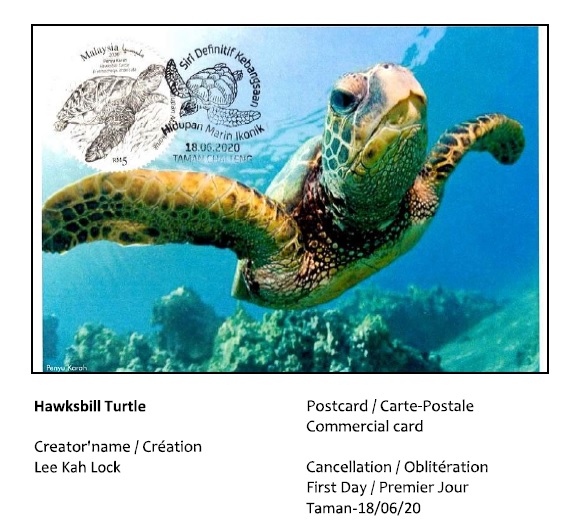
14th.- MALAYSIA (6 points)
14th.- SERBIA (6 points)
14th.- Sov.Mil. Or. MALTA (6 points)
14th.- MEXICO (6 points)
14th.- U.S.A. (6 points)
15th.- BELGIUM (3 points)
15th.- BULGARIA (3 points)
15th.- FINLAND (3 points)
15th.- GREENLAND (3 points)
15th.- SINGAPORE (3 points)
15th.- SPAIN (3 points)
15th.- SWITZERLAND (3 points)
LIST of the 60 PARTICIPATING COUNTRIES
1.- ALAND
2.- ALGERIA
3.- ANDORRA
4.- ARGENTINA
5.- ARMENIA
6.- AUSTRALIA
7.- AUS.ANTARC.
TERR.
8.- AUSTRIA
9.- BELGIUM
10.- BRAZIL
11.- BR. VIRGIN
ISLANDS
12.- BULGARIA
13.- CANADA
14.- CHINA
15.- CHINESE
TAIPEI
|
16.- CROATIA
17.- CYPRUS
18.- CZECH Rep.
19.- DENMARK
20.- FALKLAND IL.
21.- FAROE
ISLANDS
22.- FINLAND
23.- For.Yug. Rep.of
Macedonia
24.- FRANCE
25.- FRENCH
POLYNESIA
26.- GERMANY
27.- GREAT
BRITAIN
28.- GREECE
29.- GREENLAND
30.- ISRAEL
|
31.- ITALY
32.- JERSEY
33.- KOREA Rep.
(South)
34.- LIECHTENSTEIN
35.- LUXEMBOURG
36.- MALAYSIA
37.- MALTA
(Sov.Mil.Or)
38.- MEXICO
39.- MONACO
40.- NETHERLANDS
41.- NEW ZEALAND
42.- PARAGUAY
43.- POLAND
44.- PORTUGAL
45.- ROMANIA
|
46.- RUSSIA
47.- SAN MARINO
48.- SERBIA
49.- SINGAPORE
50.- SLOVAKIA
51.- SPAIN
52.- ST. PIERRE
MIQUELON
53.- SWEDEN
54.- SWITZERLAND
55.- THAILAND
56.- TUNISIA
57.- UKRAINE
58.- USA
59.- VATICAN
60.- VENEZUELA
|
LIST of the 42 COUNTRIES THAT VOTED
1.- ALBANIA
2.- ARMENIA
3.- AUSTRALIA
4.- AUSTRIA
5.- BELGIUM
6.- BRAZIL
7.- BULGARIA
8.- CANADA
9.- CHINA
10.- CHINESE
TAIPEI
11.- CYPRUS
12.- CZECH Rep.
|
13.- FINLAND
14.- FRANCE
15.- GERMANY
16.- GREECE
17.- ICELAND
18.- IRAN
19.- ISRAEL
20.- ITALY
21.- KOREA Rep.
(South)
22.- LUXEMBOURG
23.- MALAYSIA
24.- MALTA
|
25.- MEXICO
26.- NETHERLANDS
27.- NEW ZEALAND
28.- POLAND
29.- PORTUGAL
30.- QATAR
31.- ROMANIA
32.- RUSSIA
33.- SERBIA
34.- SINGAPORE
35.- SLOVAKIA
36.- SLOVENIA
37.- SPAIN
|
38.-SWITZERLAND
39.- THAILAND
40.- TURKEY
41.- USA
|
In closing, we would like to thank all the Delegates that sent in their country’s 2012 Best Maximum Card and all those delegates that sent in their Vote. Your contribution proves that Maximaphily is a dynamic Philatelic Class.
We hope by the end of this coming Summer to finalize our next ' 2013 Best Maximum Card World Competition’ and then by early next Autumn to post on our website all the pages of the Participating Countries. Please start selecting your Country's Best Maximum Card created in 2013 and then mail it to the postal address of the Chairman George Constantourakis. (See address on the 1st page).
With our sincere thanks for your active participation. Best regards
George Constantourakis Anny Boyard
Chairman Bureau Member
FIP Maximaphily Commission